He looked completely fine. Nobody knew he'd checked her Instagram fourteen times before breakfast.
If you're still replaying the last conversation. Still checking her page when you told yourself you wouldn't. Still losing entire evenings to a loop you can't switch off — this is for you.

If you are secretly checking her social media more than you'd ever admit out loud — if you're replaying the same conversation for the hundredth time — if you're functioning fine on the outside while something underneath keeps unraveling — read every word on this page.
You've tried the obvious things. Deleting her number, then re-adding it three weeks later. Distracting yourself with work until the distraction stops working around 11pm. Telling yourself "tomorrow I won't check" — and checking anyway, before your feet even hit the floor.
You know the relationship is over. Your mind hasn't gotten the memo.
The hardest part isn't even missing her. It's what the loop is doing to everything else. The sleep you're not getting. The conversations with people who are actually still in the room with you, where a third of your attention is somewhere else entirely. The version of yourself you know you're capable of being, that keeps getting crowded out by a question your mind can't stop asking.
You're not weak. You're not broken. You're running an alarm that never got the signal to shut off.
"I know. Because I built the system I wish I'd had when I was stuck in that exact cycle." — Muna Talks

This was never a willpower problem.
Obsessive thinking about someone you've lost isn't a character flaw. It's your attachment system and your threat-detection system doing exactly what they evolved to do — treating the disappearance of someone emotionally significant as unresolved danger, and scanning for a resolution that logic alone can't give it.
That's why "just move on" never worked. You can't out-think an alarm. You have to remove what's setting it off, and give your mind a different signal to respond to. That's exactly what this book is built to do.
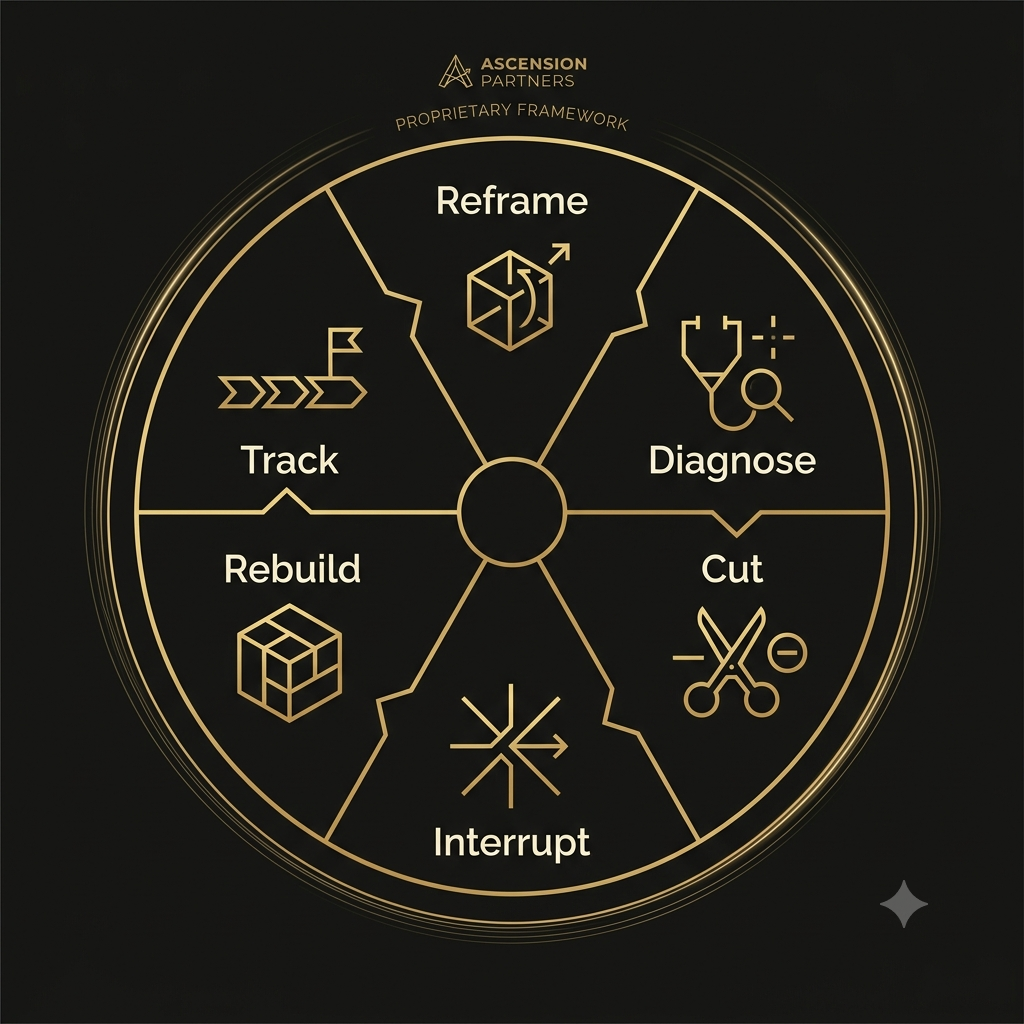
Six stages. Not theory — a sequence. You reframe why the loop is running, diagnose exactly which type of obsession you're dealing with, cut the specific inputs feeding it, interrupt the spiral the moment it starts, rebuild the mental space it used to occupy, and track your progress in a way that won't fool you into quitting in week two.
The man who isn't run by the loop anymore.
Not a man who never thinks of her again — that's not the promise here, and anyone selling you that is lying. The man on the other side of this system is the one for whom a bad moment costs an afternoon instead of a week. Who can see a message from her and feel something without being derailed by it. Who's rebuilt the space in his own head around something that's actually his.

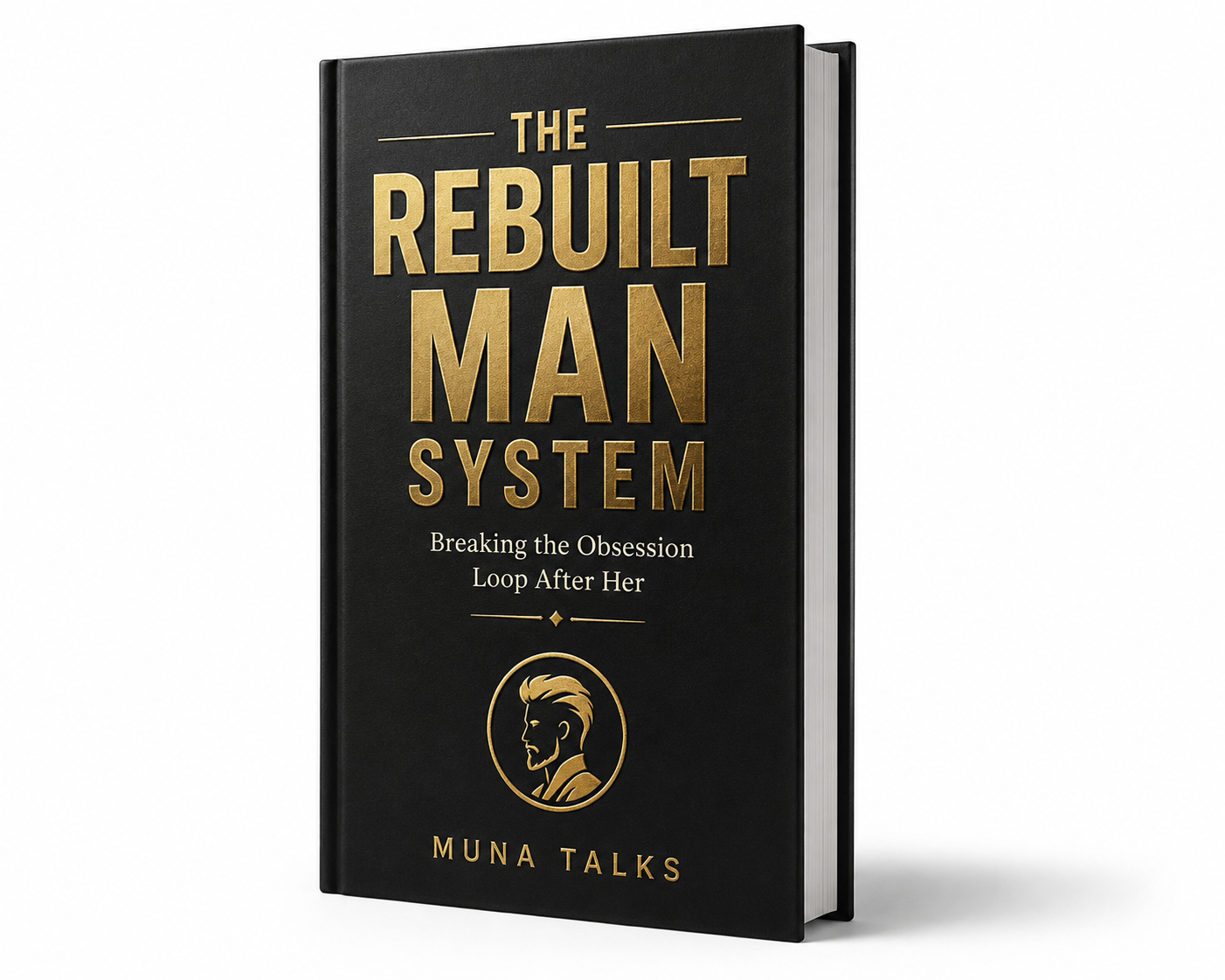
THE REBUILT MAN SYSTEM
Everything I learned rebuilding myself — documented, structured, and turned into a system you can start using tonight.
- Ch. 5Why this isn't a willpower problem — the real mechanism behind why your mind won't let go, and why fighting it head-on makes it worse.
- Ch. 6The three types of obsession — grief-based, anxiety-based, and attachment-based, and how to find out which one is actually running you.
- Ch. 11The Cut the Input protocol — a structured, timed no-contact method built for real life, not raw willpower.
- Ch. 12The spiral-interrupt tool — what to do in the exact moment an obsessive thought hits, not after it's already cost you the evening.
- Ch. 16–19The full 60-day walkthrough — a week-by-week guide so you're never guessing what comes next.
- BonusThe Moments That Will Test You — a scenario guide for the sighting, the late-night text, the anniversary, and the mutual-friend update.
- AppendixMonthly tracker & daily containment log — so you can see real progress the daily spirals hide from you.
You don't need therapy credentials, a support group, or years of "time." Everything you need is in this workbook, and you can start Stage 1 tonight.
Real Men. Real Turning Points.
"I picked up The Rebuilt Man System at a point where I couldn't get out of my own head. Every day started with thoughts about my past relationship, and every night ended the same way. What surprised me most wasn't motivation — it was the structure. Instead of telling me to 'move on,' it showed me exactly what to do when the thoughts came back. Within a few weeks, I wasn't constantly checking my phone or replaying old conversations. I was sleeping better, thinking more clearly, and putting my energy back into building my own life."
"I bought The Rebuilt Man System for my brother after his divorce. He'd become withdrawn and seemed stuck replaying everything that had happened. Over the next few weeks I noticed small but meaningful changes — he stopped talking about his ex every day, started exercising again, and focused on rebuilding his own life instead of searching for answers that would never come. Seeing him laugh again and make plans for the future was something I honestly wasn't sure I'd see so soon."
"This book became much more than something I read — it became something I lived. What changed for me wasn't overnight, but it was real. Today, I can honestly say she no longer occupies my mind the way she used to. I don't wake up wondering if she'll text. I don't check her social media. I've reclaimed my peace, my focus, and my confidence. If you're willing to follow the process instead of looking for quick fixes, this workbook can become a turning point. It certainly was for me."
"I bought The Rebuilt Man System for my son after watching him struggle quietly following the end of a relationship. He wasn't the type to talk about his feelings. He carried everything inside, convinced he had to deal with it alone. I gave him the workbook without expecting much. A few weeks later, I noticed subtle changes — he seemed lighter, spending less time isolated in his room, more time focused on his goals. One evening he told me, 'This book didn't tell me to ignore what happened. It showed me how to stop letting it control my life.' Hearing those words meant more to me than I can explain. As a mother, seeing your child regain his confidence, peace, and direction is priceless."
"I was stuck in that mental loop for years. Even after moving from the UK to Australia for a fresh start, nothing really changed. A different country didn't give me a different mind — the memories followed me everywhere. This workbook finally helped me understand why I couldn't let go. More importantly, it gave me a practical system to break the cycle. It wasn't about pretending the pain never happened — it was about learning how to stop feeding it. For the first time in years, my mind feels quiet. I've stopped checking, stopped overthinking, and started living again."
"For years I thought time alone would heal me, but I was still carrying the same emotional baggage. This workbook helped me understand why I was stuck and, more importantly, showed me exactly how to get unstuck. The biggest surprise? A few weeks after I started applying the system, my ex reached out wanting to reconnect. Months ago, I would've jumped at the opportunity without thinking. This time, I didn't — not because I hated her, but because I'd rebuilt the man I had neglected for so long. I wasn't looking for another chance. I had already found a better direction."
The full six-stage system, the 60-day walkthrough, the bonus scenario guide, and the trackers — everything, in one download.
Get The Rebuilt Man System Now30-Day, No-Questions-Asked Guarantee
Read it. Run the system. If it doesn't do anything for you inside 30 days, email for a full refund — no questions asked. You're only risking thirty days of trying, not your money.
Right now, you have two choices.
If you close this page
- The loop keeps running exactly as it has been.
- Tonight looks like the last twenty nights.
- You keep checking, keep replaying, keep losing hours you won't get back.
- You wait for "time" to fix something time alone was never going to fix.
If you start tonight
- You have a diagnosis instead of a vague sense that something's wrong.
- You have a protocol for the next time the spiral starts.
- You have a 60-day plan instead of an open-ended guessing game.
- You start building the version of yourself she left behind.
Questions
How is it delivered?
Instantly. The moment your payment is confirmed on Gumroad, you'll get a download link to the full PDF — no waiting, no shipping.
Is this therapy, or a replacement for it?
No. This is a structured self-guided system for the everyday obsessive-thinking loop many men go through after a breakup. If your experience touches on something deeper — an old wound, a pattern that predates this relationship — the book tells you plainly when that's the case and encourages pairing it with professional support.
How long until I notice a difference?
It depends on which type of obsession you're dealing with — the book helps you diagnose that in Chapter 6. Anxiety-based patterns often ease within weeks. Grief-based patterns typically take three to six months. The book is honest about this instead of promising an overnight fix.
What if I relapse and check her page anyway?
It's covered directly — Chapter 15 is built entirely around handling relapse without spiraling into "I've ruined it." A single slip is data, not a failure of the whole system.
Is the guarantee real?
Yes. Run the system for 30 days. If it hasn't done anything for you, email for a full refund — no forms, no hoops.
Why is this different from every other "get over her" video?
Because it's a system, not a slogan. Instead of "just move on," you get a diagnosis, a protocol, a moment-by-moment interrupt tool, and a 60-day plan — built from what actually helped the author, not generic advice.
One last thing.
Picture yourself thirty days from now. Will you still be checking her page before breakfast? Or will you be somewhere else entirely — sleeping through the night, present in the conversations you're actually having, building something that's yours?
Now picture yourself thirty days from now if you close this page tonight and do nothing. Same loop. Same 11:47pm scroll. Same tired.
The difference between those two versions of you is a decision you make in the next sixty seconds.
Get The Rebuilt Man System — $35